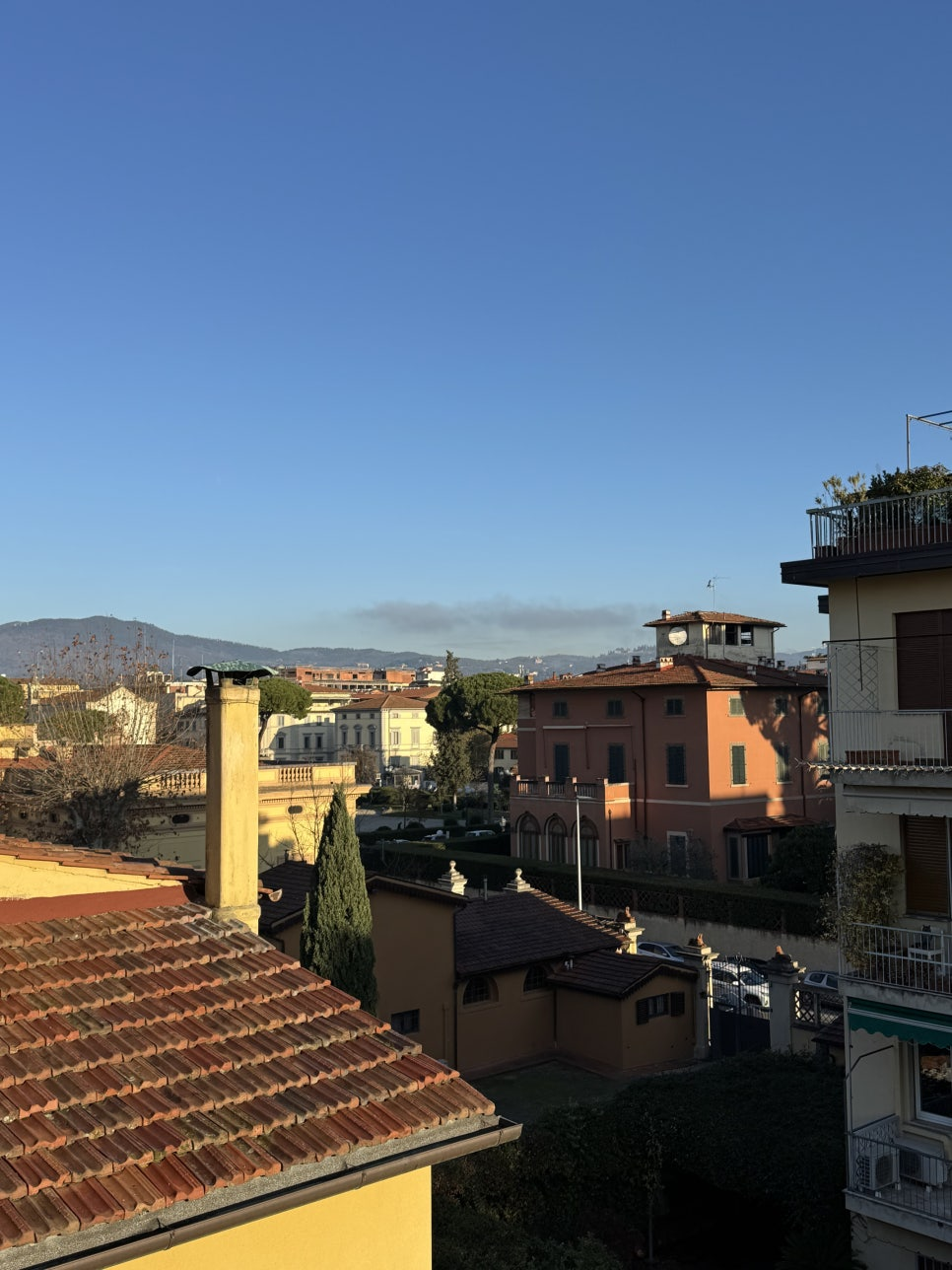
Greetings from Florence. It has been a while since I last wrote to you.
I am writing this from a quiet corner of Florence, Italy, gazing at cypress trees and terracotta buildings bathed in the morning light. Here, I hope to find peace and deepen my perspective as a Wise Steward regarding the times and the enterprises we face.
As the year draws to a close, I hope my previous analysis on anticipating the trends of our time has been helpful for your assets and biblical investment journey.
I am grateful to see that the forecasts I shared at the beginning of 2025—AI-driven national and corporate investment, the resulting energy shortages, the historic highs in silver prices projected in March, and the strategic stockpiling of raw materials forecast in October—have all become central topics of discussion.
(Related Articles Links Here)


Global Wave 2025 Q3: Megatrend Investment Strategy

Commodity Shock from U.S.-China Tensions: Impending Inflation and Investment Strategy
What issues will emerge as we approach 2026? What should we anticipate in the next 3 to 6 months? Economic uncertainty seems higher than ever. With many asset sectors appearing overvalued in the short term, it is difficult to separate the wheat from the chaff.
So today, rather than discussing economics, I want to share the goals and direction of wealth accumulation—the biblical financial principles I seek to pursue—and reset my mindset as a wise steward.
Biblical financial principles offer profound wisdom and peace of mind to investors chasing dopamine-fueled extreme returns. They teach us the purpose of wealth, how to discern the macro-environment, how to research the fundamentals of companies, and how to execute investments. Furthermore, they guide us on managing greed and fear, knowing when to sell, establishing our identity throughout the process, and finally, managing our profits.
Let us begin.
The Wise Steward: The Essence of Investment According to Scripture
“From one talent to ten talents.” This is every investor’s dream. But Scripture tells us this isn’t simply a matter of returns. It is about living as a faithful steward before God. The parable of the talents and the role of stewardship illuminate the fundamental attitude investors should have.
1. The Steward’s Identity: Entrustment, Not Ownership
The first thing to establish in investing is identity. Who am I?
“Otherwise, you may say to yourself, ‘My power and the strength of my hands have produced this wealth for me.’ But remember the Lord your God, for it is he who gives you the ability to produce wealth.” (Deuteronomy 8:17-18)
We are not owners of assets, but managers. When investment account numbers grow, it is easy to mistake this as purely the result of our own ability and judgment. But Scripture is clear: even the ability to gain wealth comes from God.
“Those who trust in their riches will fall, but the righteous will thrive like a green leaf.” (Proverbs 11:28)
The moment we rely on our assets, we become as precarious as falling leaves. Conversely, when we maintain our righteous center as stewards, we can flourish like green leaves. Because it is not ours, we need not be excessively greedy. Because it is not ours, we need not be overcome by fear. Stewards simply bear the responsibility to manage faithfully according to the Master’s will.
“Now it is required that those who have been given a trust must prove faithful.” (1 Corinthians 4:2)
What is required of stewards is not outstanding returns, but faithfulness. Of course, faithful management leads to results, but faithfulness in the process takes priority over an obsession with outcomes.
2. The Parable of Talents: Faithful Action
“Again, it will be like a man going on a journey, who called his servants and entrusted his wealth to them… To one he gave five bags of gold… each according to his ability.” (Matthew 25:14-15)
The parable of the talents contains the essence of investment. The Master entrusted assets according to each servant’s ability. The servants who received five and two talents immediately went out and traded, earning five and two more respectively.
“His master replied, ‘Well done, good and faithful servant!'” (Matthew 25:23)
Notice the Master’s praise. Not “you made great profits,” but “you have been faithful.” What mattered was not the rate of return, but the attitude of faithfulness.
On the other hand, the servant who received one talent buried it in the ground out of fear. Though it seemed like a safe choice to avoid loss, the Master condemned this as wicked and lazy. A steward’s mission is not to avoid risk entirely, but to understand the Master’s intention and act faithfully.
3. Wisdom to Discern the Times: Reading the Era
Before investing, we must discern the flow of the times and the macro-environment. Scripture requires wisdom to read the signs of the times, not just the phenomena before our eyes.
“You know how to interpret the appearance of the sky, but you cannot interpret the signs of the times.” (Matthew 16:3)
Jesus rebuked the people for predicting the weather while failing to see the essential currents of their era. Investment is the same. If we focus only on short-term chart fluctuations, we miss the major flows of the economy and structural changes in industries.
Discerning macro flows—interest rate cycles, economic waves, technological innovation, and demographic changes—is the starting point. Just as we predict rain by observing clouds, we must read the times by examining economic indicators and industry trends.
“The prudent see danger and take refuge, but the simple keep going and pay the penalty.” (Proverbs 22:3)
Wise investors detect warning signs in advance. They prepare for overheated markets, crumbling fundamentals, and policy changes. The foolish jump in when everyone is cheering and collapse when the bubble bursts.
4. Wisdom to Examine: Building Investment on Solid Rock
Once you have discerned the times, you must examine the essence and fundamentals of individual companies.
“The plans of the diligent lead to profit as surely as haste leads to poverty.” (Proverbs 21:5)
Hastily jumping in because of rumors (“This is going to explode!”) is gambling. True value is hidden, and discovering it is the duty of a prudent investor. You must not shirk the ‘labor of due diligence’—reading financial statements, verifying business models, and analyzing competitive advantages.
“Therefore everyone who hears these words of mine and puts them into practice is like a wise man who built his house on the rock.” (Matthew 7:24)
Investment is like building a house. Companies with strong fundamentals are built on rock. They do not collapse even when storms (bear markets) rage. Conversely, investments based on rumors or charts alone are houses built on sand. Building on rock requires the labor of digging deep and laying foundations. Investment without the sweat of analysis is merely a house on sand.
5. Sowing Seeds with Faith: The Courage to Execute
Once you have discerned the environment and examined the companies, it is time to act. Many investors hesitate here, thinking, “I’ll buy when it drops a bit more,” or “I’ll enter when it’s certain.”
“Sow your seed in the morning, and at evening let your hands not be idle, for you do not know which will succeed…” (Ecclesiastes 11:6)
Farmers are never 100% certain when sowing seeds. Yet, they sow with faith. Investment is the same. No matter how thoroughly we analyze, the future remains uncertain. But after examining wisely, we must execute with faith.
“And without faith it is impossible to please God.” (Hebrews 11:6)
The servant who buried the talent didn’t lose money, but he did nothing out of fear. A steward’s faithfulness lies in wise examination followed by action with faith. Waiting for “perfect timing” means never planting at all.
6. Wisdom to Control Emotions: Between Greed and Fear
After investing, the biggest battle occurs within. When markets rise, greed arrives; when they fall, fear floods in.
“For the Spirit God gave us does not make us timid, but gives us power, love and self-discipline.” (2 Timothy 1:7)
Panic selling during a crash or recklessly chasing rallies during a bubble are symptoms of being dominated by fear and greed.
“Like a city whose walls are broken through is a person who lacks self-control.” (Proverbs 25:28)
Self-discipline is the wall that protects investors. Without it, even the best strategy crumbles.
“If you find honey, eat just enough—too much of it, and you will vomit.” (Proverbs 25:16)
Wisdom is taking “just enough” when you see profits. If you are greedy for “just a little more,” you may eventually lose it all. Conversely, if you invested in a solid company (“house on rock”), do not fear the storm. Trust and wait quietly.
7. Wisdom to Harvest in Season: When to Sell
Just as farmers have a harvest time, investors have a time to reap.
“A time to plant and a time to uproot.” (Ecclesiastes 3:2)
Faithful stewards discern timing. If a farmer leaves fully grown grain hoping for more growth, it will rot. In investment, selling is not quitting, but the sacred act of Harvesting. Do not get intoxicated by “paper profits” (digital numbers on a screen); harvest at the proper time to fill your actual storehouse.
When is that time?
- When the investment logic collapses.
- When sufficient profits have been made (“just enough”).
- When better opportunities appear.
Selling is not defeat. It is the completion of one cycle and preparation for the next.
8. The Steward Managing Profits: Where Will You Channel Them?
Finally, where will you use these fruits?
“Do not store up for yourselves treasures on earth… But store up for yourselves treasures in heaven.” (Matthew 6:19-20)
A steward’s ultimate goal is not simply to increase assets, but to use them for good according to the Master’s will. If profits are used only for vanity, they are treasures stored on earth. But if they flow toward God’s kingdom, neighbors in need, and the next generation, they become treasures in heaven.
When wealth’s purpose becomes ‘mission’ rather than ‘greed,’ money becomes a tool, and we stand as stewards.
In Closing
Isn’t it amazing that this profound wisdom exists within Scripture? From discerning the times to examining fundamentals, sowing with faith, controlling emotions, harvesting in season, and using the fruits for good—the entire investment process is illuminated by biblical wisdom.
I hope you, too, will learn and enjoy this wisdom.
A Prayer of an Investor
Investment requires cold, rational analysis. It also requires a warm heart and prayer on bended knee.
“For the Lord gives wisdom; from his mouth come knowledge and understanding.” (Proverbs 2:6)
True wisdom begins with fearing the Lord. Even if my account is stained with greed or colored by fear today, I will not be discouraged. I am not failing; I am being trained to become a faithful steward.
I will return to my identity: “I am not the owner, but a steward entrusted with the Master’s property.” I will discern the signs of the times, perform the labor of examining value, and invest as if building a house on rock. I will sow with faith, hold with trust, and harvest in season. And I will channel those fruits to good places according to the Master’s will.
Today again, I will trust in God who is greater than market volatility, and stand quietly as a faithful steward.
Amen.